Activities
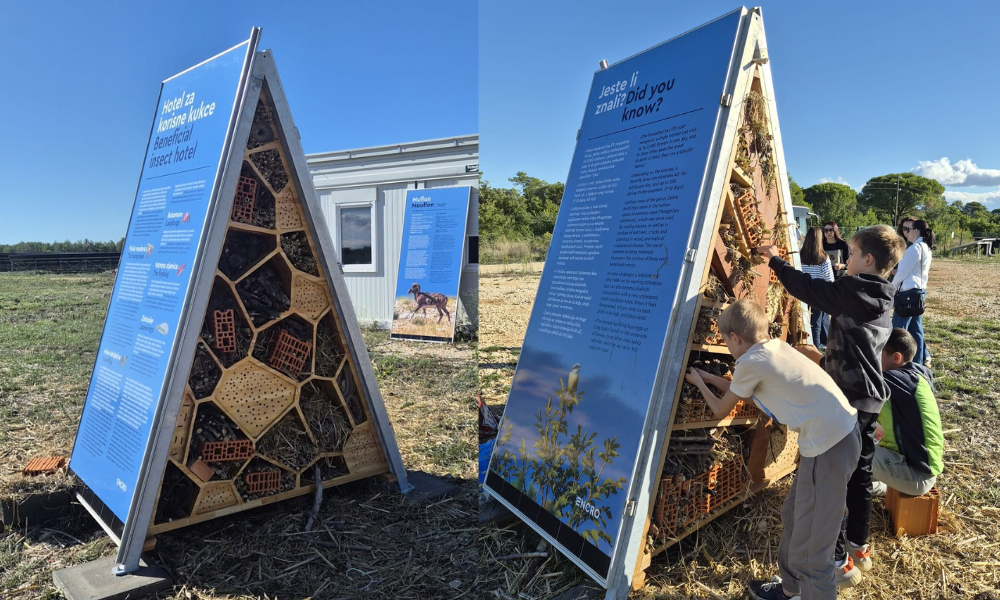
Last week, at the Gradić and Dubovi solar power plants near Benkovac and Bibinje, we officially opened two new insect hotels to further support biodiversity conservation at our renewable energy sites.
This project was made possible with the help of students from Benkovac Primary School and Bibinje Primary School, whose dedicated efforts contributed to filling the wooden structures with a variety of natural hollow materials designed to mimic the cracks, cavities, and shelters that insects use in nature.
In recent years, both the abundance and diversity of wild pollinators have been steadily declining. The main causes of this trend are human activities, particularly intensive agriculture, excessive pesticide use, habitat destruction, climate change, and the spread of invasive alien species. As beneficial insects play an irreplaceable role in maintaining ecological balance, their protection is a key priority in preserving biodiversity.
Alongside the use of renewable energy sources, biodiversity conservation is one of ENCRO’s core priorities. For this reason, we decided to build insect hotels, providing spaces where beneficial insects can find shelter, nest, and overwinter.
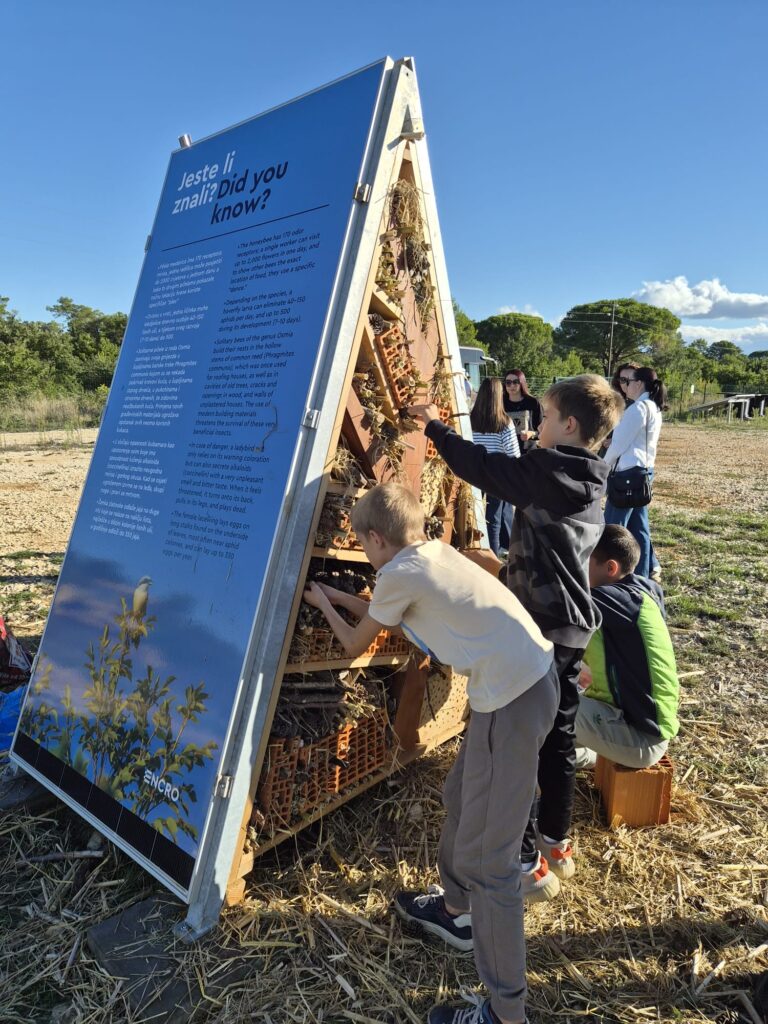
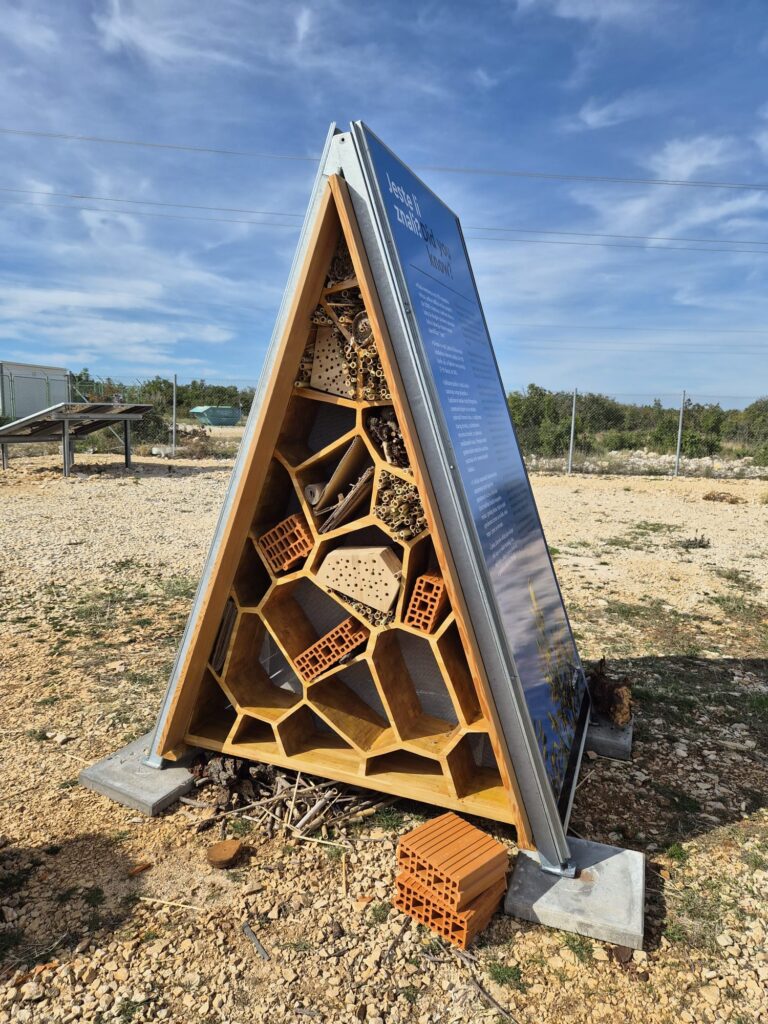
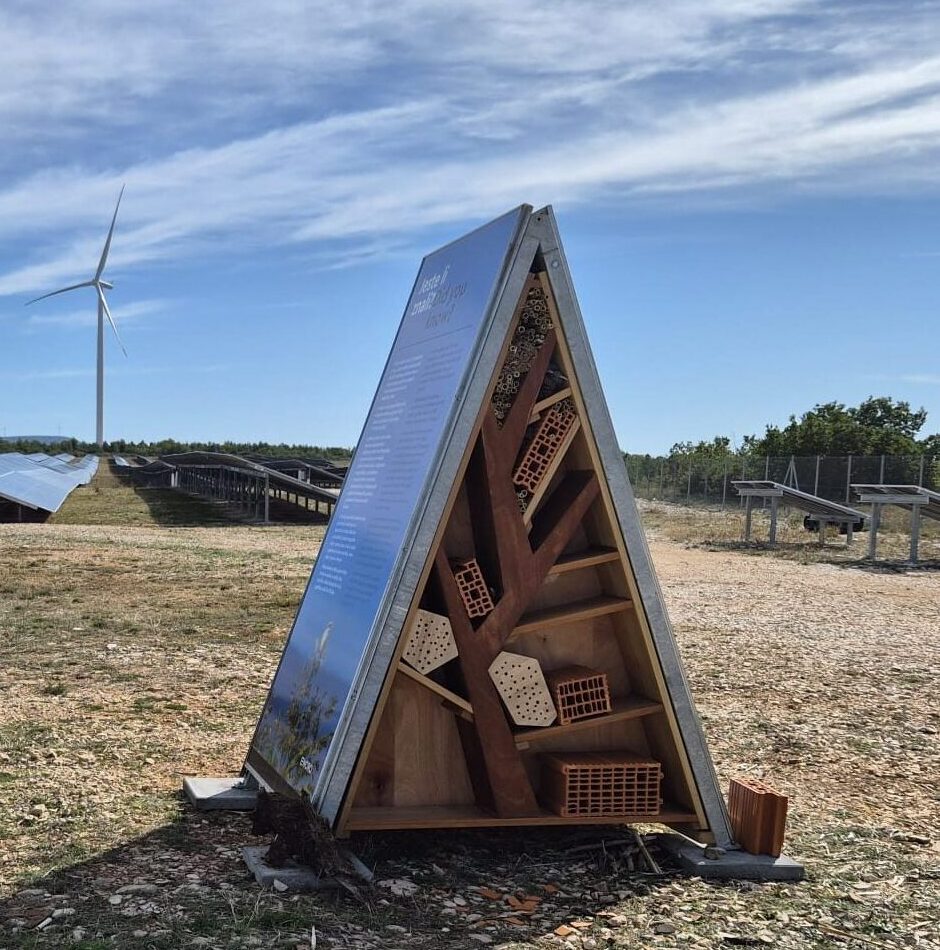
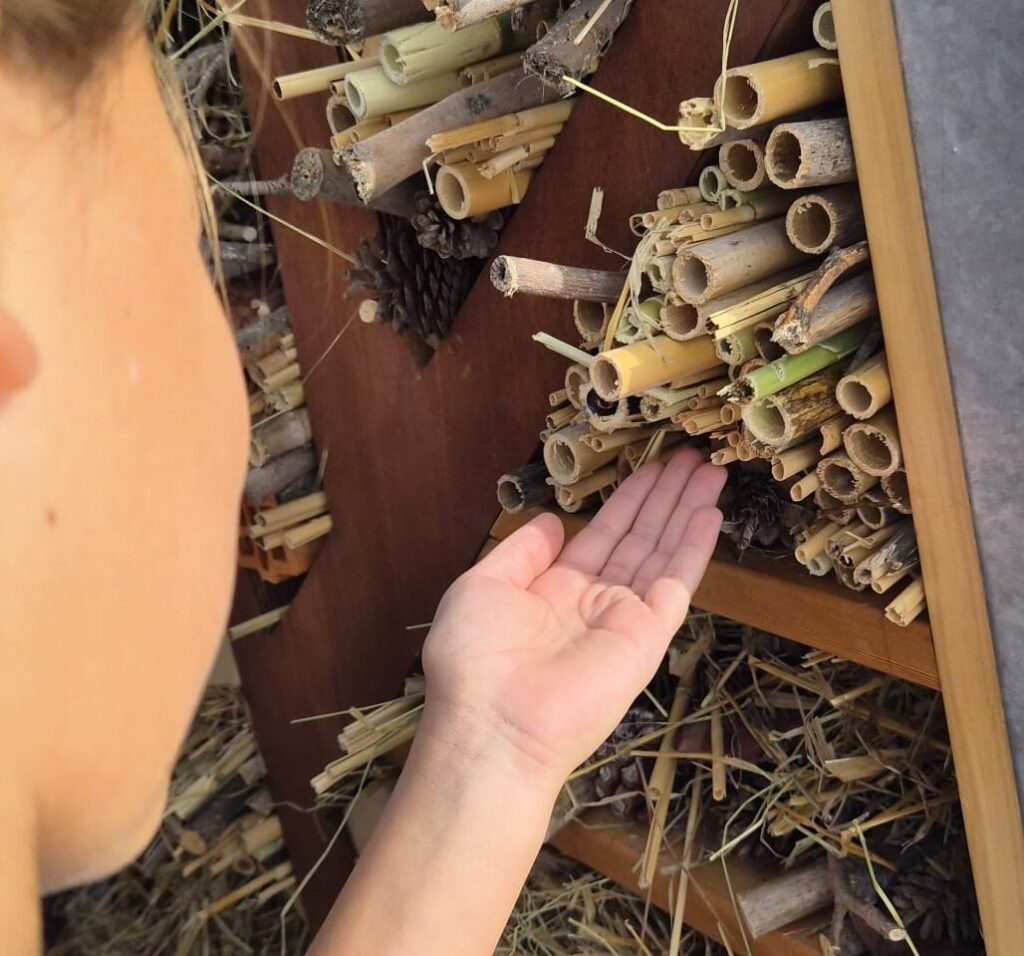
The hotel frames were created from defective solar panels that had reached the end of their operational use. Through this project, we gave them a new purpose by repurposing them as protective roofs for the hotels. Between the panels, a double-sided wooden structure with compartments was installed and filled with suitable nesting materials.
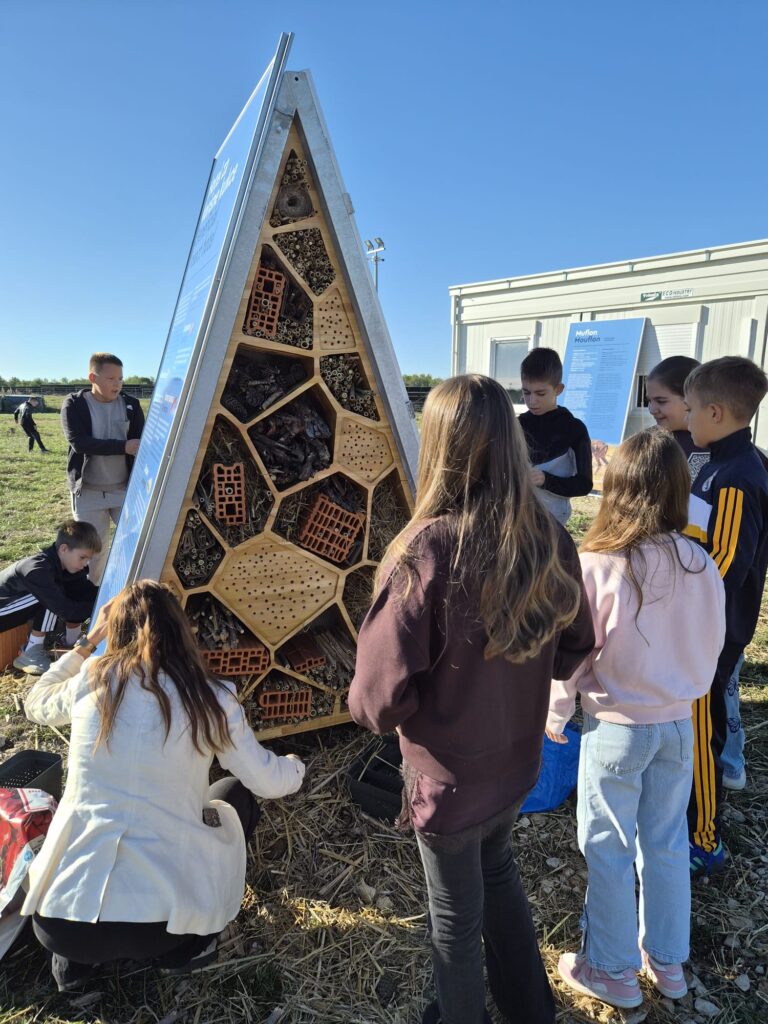
The design of the hotels was also inspired by patterns found in nature. The shapes of the double-sided wooden structures are based on tree-shaped pattern and the Voronoi pattern, whose cellular structure resembles the intricate geometry of dragonfly wings.
The final and most demanding stage of “furnishing the hotel rooms”, namely filling the compartments of the insect hotels, was enthusiastically taken on by students from the local primary schools in the communities hosting our Gradić Solar Power Plant and Dub I/II Solar Power Plant projects.
The compartments were filled with a variety of natural materials, including hollow bamboo and reed stems, drilled pieces of wood, pine cones, straw, bark, perforated bricks, and dry leaves. These materials create ideal habitats and nesting spaces for different insect species.
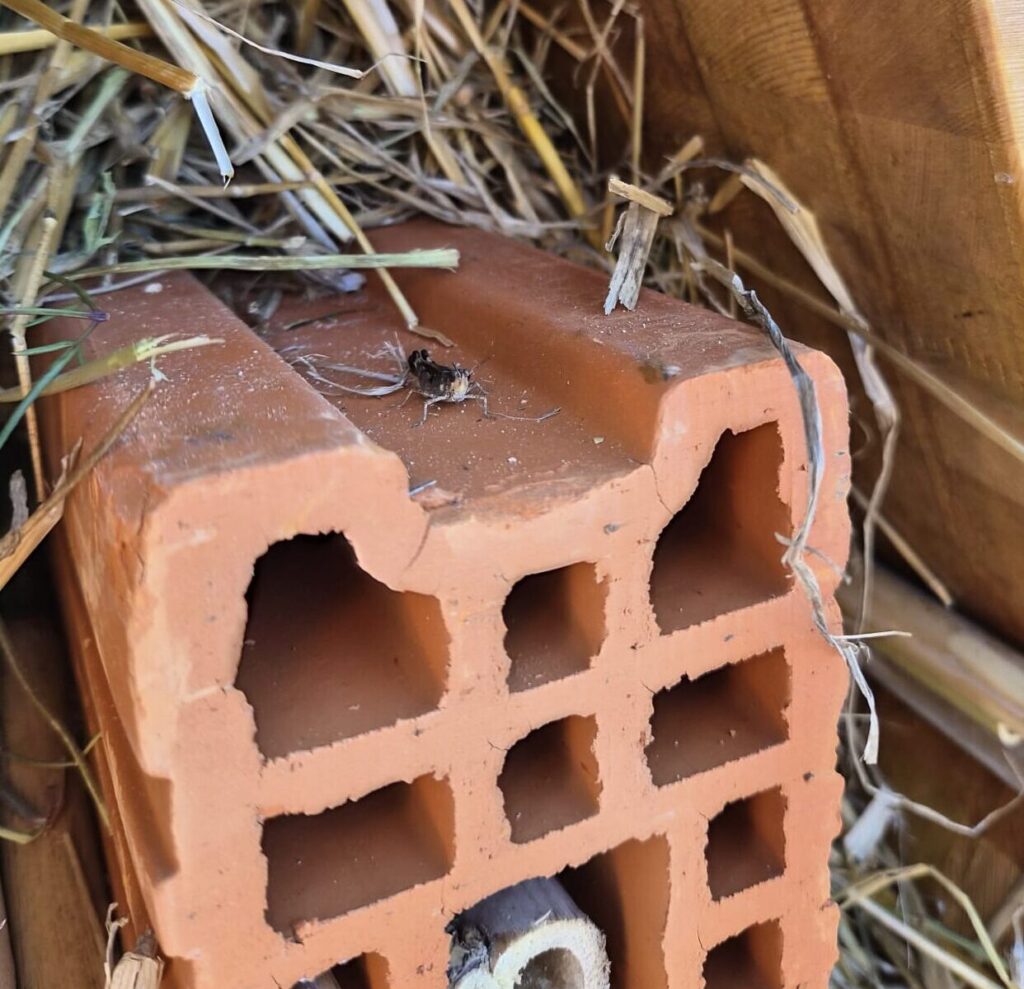
The students were also given the honour of welcoming the hotels’ very first residents, who arrived on the opening day themselves. The inaugural guests were a firebug and a grasshopper. The grasshopper became the first resident of the insect hotel at the Dubovi solar power plant, while the firebug moved into the hotel at the Gradić solar power plant.
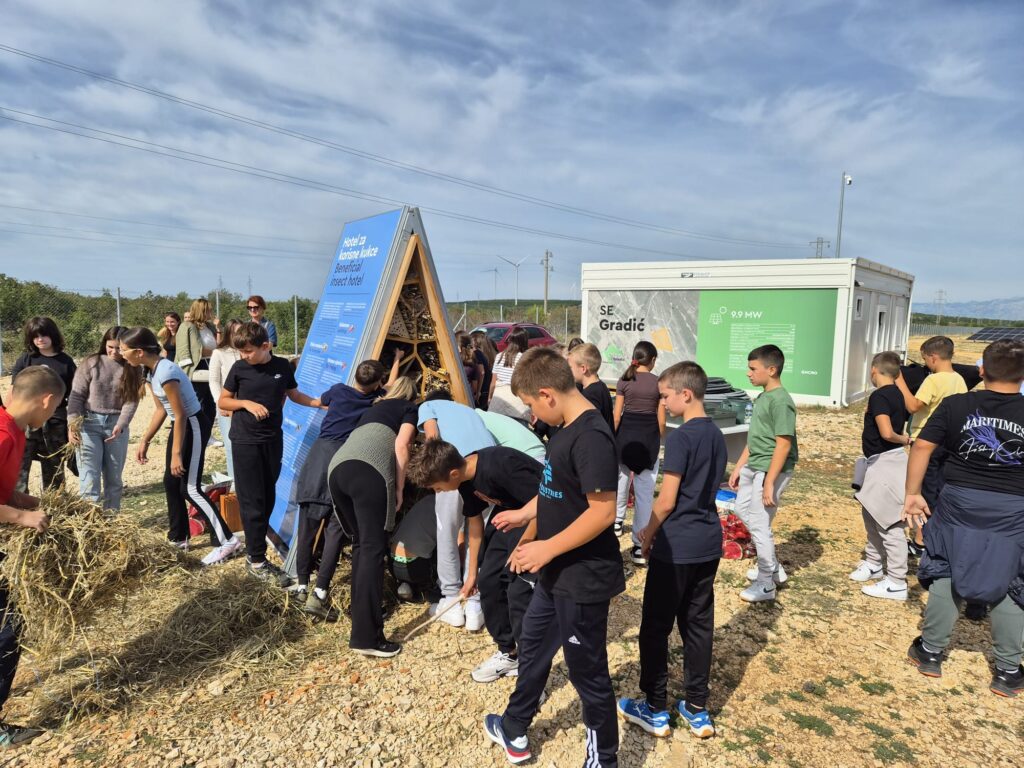
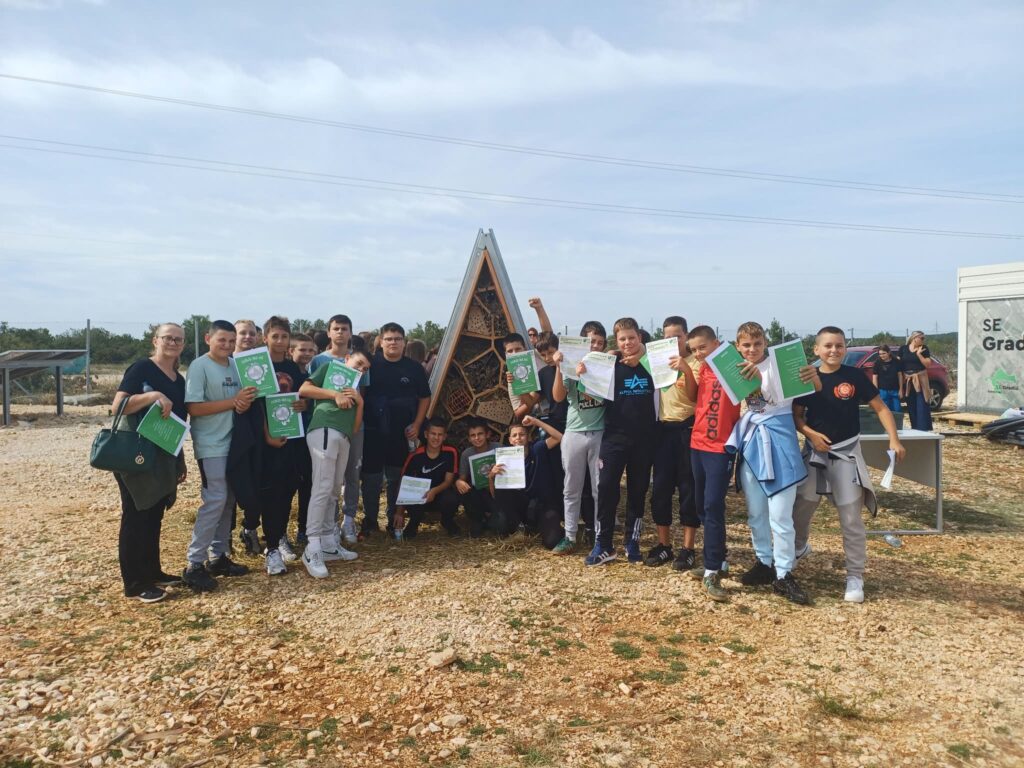
The first insect hotel was officially opened on 24 September at the Gradić Solar Power Plant, with the help of sixth-grade students from Benkovac Primary School.
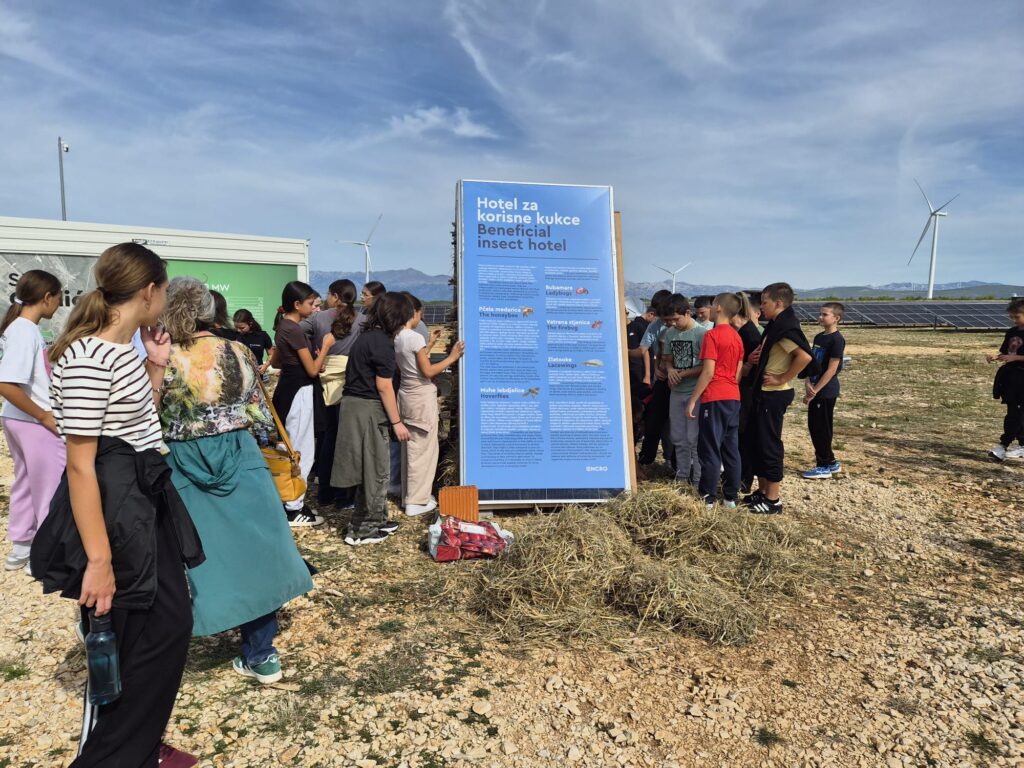
A total of 48 students, accompanied by four teachers, took part in a hands-on workshop dedicated to building an insect hotel for beneficial insects.
During the workshop, the students split into two teams, boys and girls, with each group responsible for furnishing one side of the hotel. Both teams worked with great enthusiasm and diligence, successfully filling their respective sections with natural materials to create welcoming habitats for future insect residents.
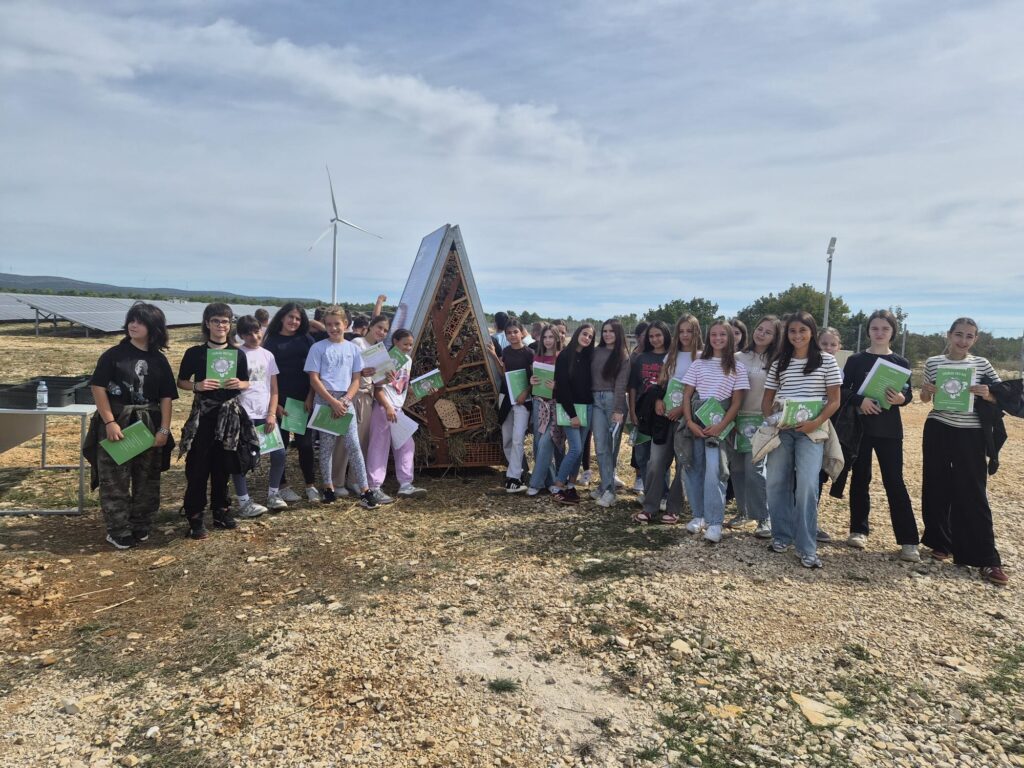
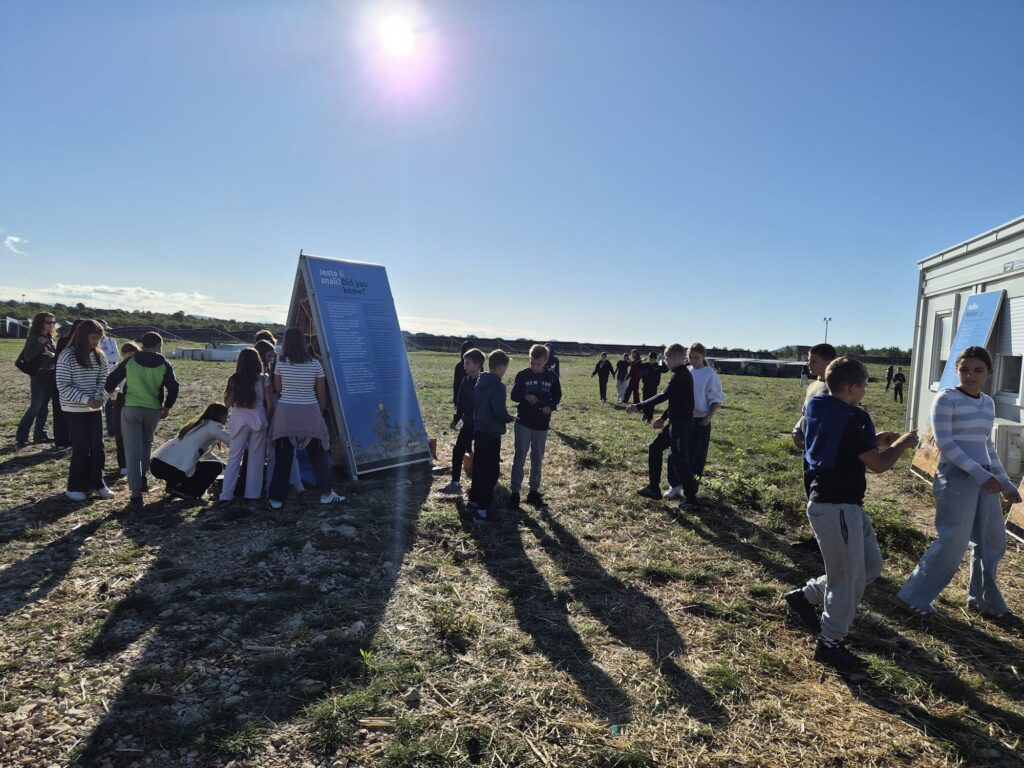
On Friday, 25 September, we spent a sunny morning with enthusiastic fifth-grade students from Stjepan Radić Primary School in Bibinje, who visited the solar power plant accompanied by three members of the school staff.
Just like their peers from Benkovac, the students took part in furnishing the insect hotel. The girls created the section inspired by the shape of a dragonfly wing, while the boys were responsible for the second section, designed to resemble the structure of a tree. With great dedication and teamwork, both groups successfully completed their parts of the hotel, helping to create a welcoming habitat for its future insect residents.
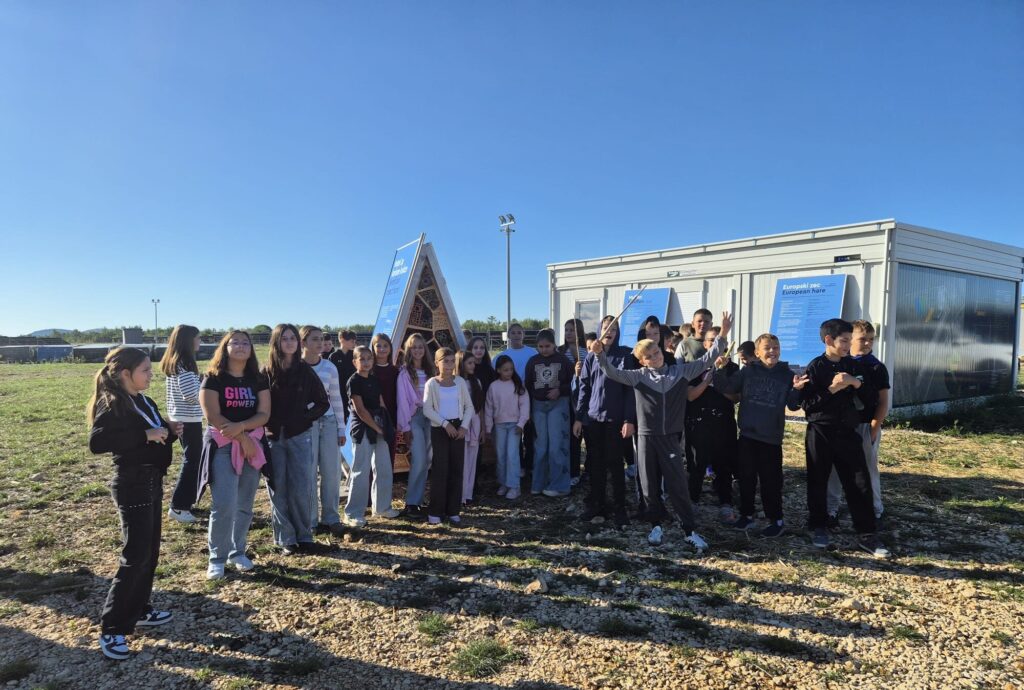
The students were welcomed at the solar power plant by our colleague, Ana Ptiček, an environmental and nature conservation specialist, who introduced the task and gave a short presentation on beneficial insect species and their important role in preserving biodiversity.
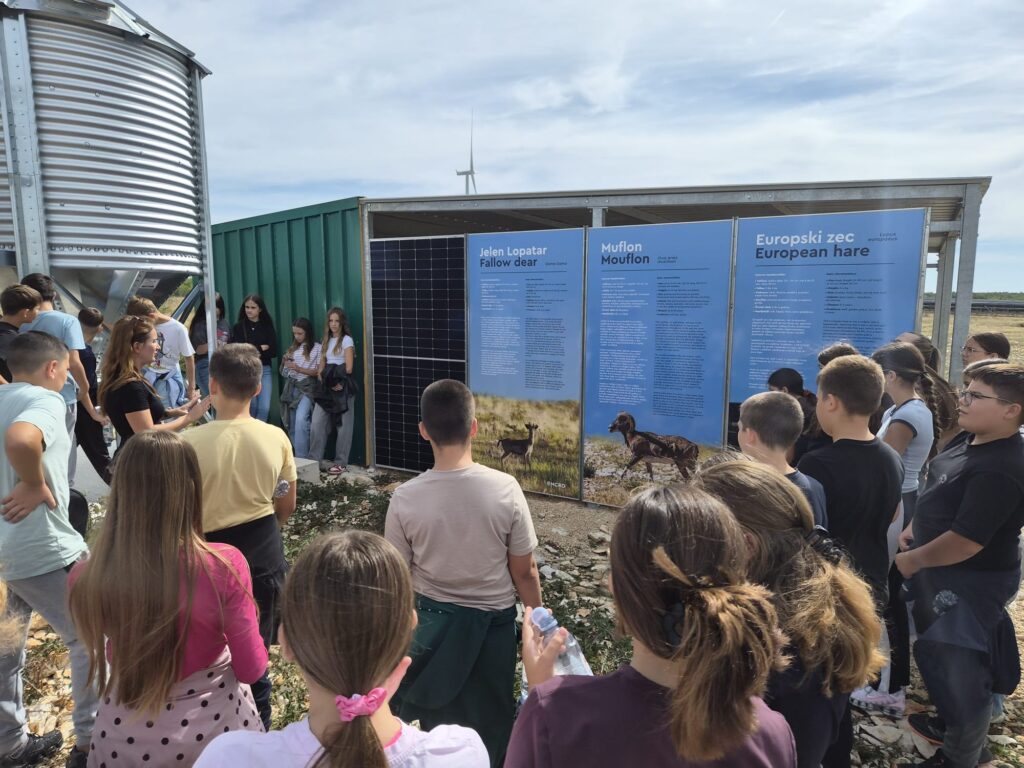
Following the engaging workshop, we took the students on a guided tour of the solar power plant, where they learned more about renewable energy sources and the operation of solar energy facilities. The visit also provided an opportunity to observe some of the wildlife that inhabits the area around the solar power plants, including mouflons, fallow deer, and hares, offering a firsthand glimpse of the rich biodiversity that these sites support.
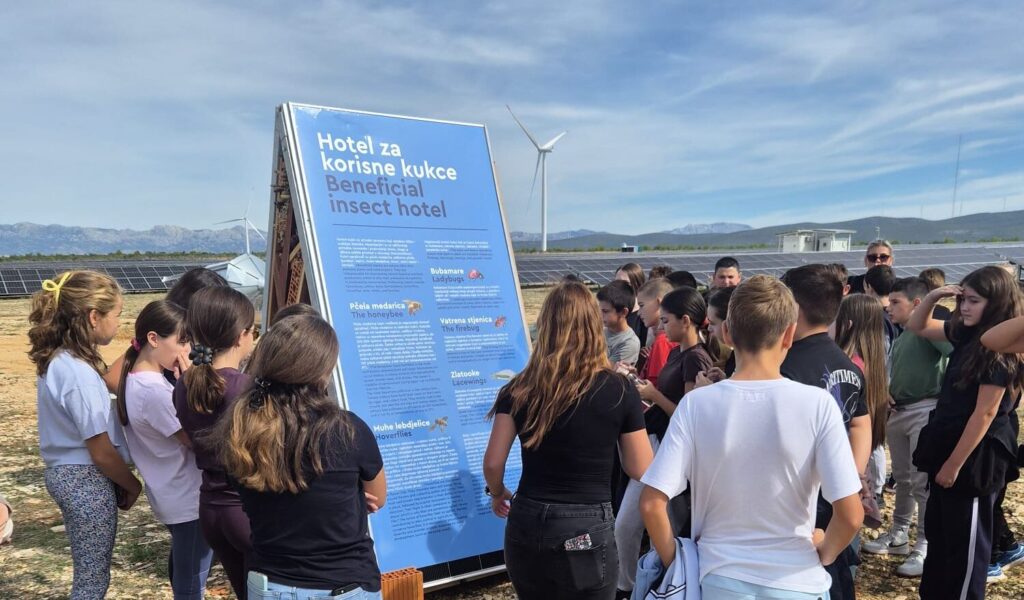
By taking part in this educational activity, the students spent part of their school day in nature, learning about both the large and small inhabitants of our environment. Through hands-on experience, they gained a better understanding of biodiversity and the importance of protecting the ecosystems that surround us.
We would like to thank Benkovac Primary School and Stjepan Radić Primary School in Bibinje for enthusiastically accepting our invitation and helping us create what we hope was both a valuable and unforgettable experience for their students. Together, we gave young people the opportunity to connect with nature, learn about sustainability, and contribute directly to biodiversity conservation.